
Inside the task · Methods note
The hidden role of human cues in dog experiments
A handler’s posture, gaze, voice or leash tension can signal an answer to a dog during a test, even when nobody means it to.
 By Nora Vance, Contributing writer · 8 min read · Published · Updated
The handler is part of the setting
A handler’s posture, gaze, voice or leash tension can signal an answer to a dog during a test, even when nobody means it to. A dog in an experiment is never responding to a task in isolation. It’s responding to a room that includes a handler, a tone of voice, a posture, sometimes a leash tension, and a person’s own expectation about what the dog will do next. That handler is an experimental variable whether or not anyone treats it as one.
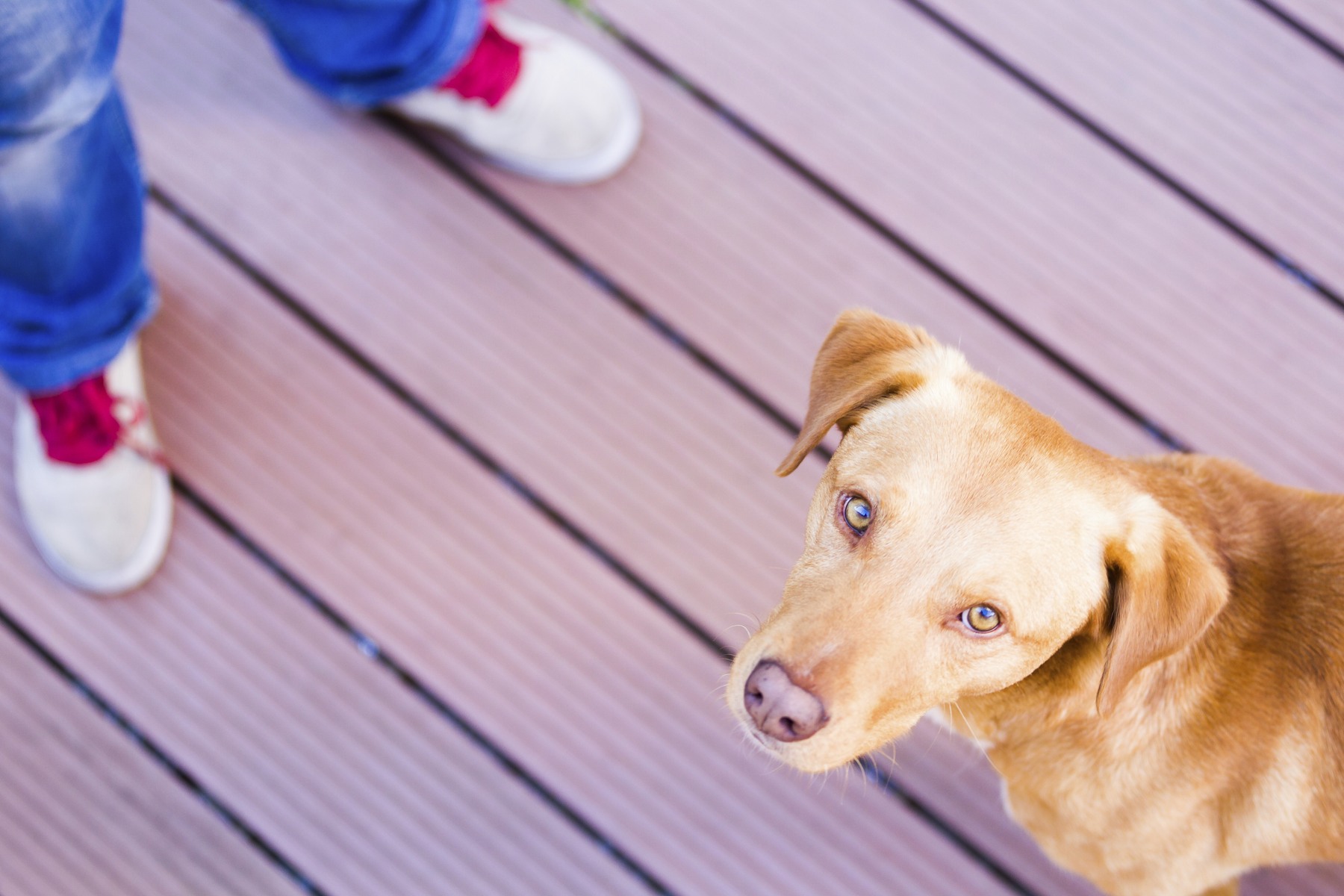
This matters because responsiveness to human gesture is exactly what the study described here measures in dogs. Testing 375 eight-week-old puppies on a battery of social-cognitive measures, Bray and colleagues report that the puppies were highly skillful at using diverse human gestures, that they found no evidence performance required learning, and that over 40 percent of the variation in point-following and attention to human faces was attributable to genetic factors. A tester who expects a dog to succeed at a pointing task, for instance, can shift their posture toward the correct location without meaning to. A caretaker who anticipates a stressed response might handle the leash differently before any test stimulus appears.
The NC3Rs guidance on masking in animal research frames this as a general problem that spans species, dog cognition included. It says researchers often expect a particular outcome, which can lead to unintentional subtle differences in how animals from different groups are handled, how treatments are administered, how measurements are collected and how data is interpreted, and that this has been demonstrated in experiments using rats, pigs, cattle, chicken, ants and flatworms. Flatworms are on that list. The bias comes from the people running the study, so it can appear in any species.
The mechanism described there, expectation shaping handling, measurement, or interpretation, applies directly to any study where a person is in the room with the animal during testing. For dog studies specifically, the relevant question covers who was present, what they knew about the condition, whether their behavior could have signaled the intended answer, and what the dog did.

A few concrete points worth separating:
- The handler’s knowledge of the hypothesis is different from the handler’s knowledge of which condition the dog is in. Both can bias outcomes, but they bias them differently.
- Physical proximity to the dog during a trial (holding the leash, standing in the dog’s line of sight, cueing a “sit” or “stay”) creates more opportunity for unintentional signaling than a handler positioned out of view.
- Familiarity between handler and dog changes the baseline. A dog tested by its own owner and a dog tested by a stranger are not in the same experiment, and a paper that pools them is making an assumption worth stating.
None of this makes a study invalid, but it can still need scrutiny of its setting alongside its task, before a dog’s behavior counts as evidence of what the study claims to measure.
Who was blinded in the dog study?
The most useful single question to ask about any dog behavior study is who did not know the condition each dog was in. Blinding (also called masking) is the practice of concealing group allocation from the people running the study, handling the animals, or scoring the data, and it exists specifically because knowledge of the hypothesis changes behavior around the animal, even when no one intends it to.
The NC3Rs resource on masking is explicit that unmasked studies tend to overestimate the effectiveness of the interventions or conditions being tested. The claim describes a mechanism separate from fraud: how expectation subtly shapes handling, measurement, and interpretation, conclusions the NC3Rs draws from studies with several animal species, not one specific to dogs.
Applying the same logic to dog cognition or behavior research, the underlying mechanism doesn’t disappear because the species changed. A few distinct roles can be blinded or unblinded independently:
- The person delivering the test or cue to the dog.
- The person scoring or coding the dog’s response, often working from video review instead of watching live in the room.
- The person analyzing the resulting data, who may or may not know which dogs were in which group.
A study can blind one of these roles and not the others. Full masking through every stage is not always feasible, and the NC3Rs guidance itself acknowledges that partial masking, applied at whichever stage is practical, still reduces risk compared to no masking at all.
When reading a dog behavior study, or a summary of one, it’s worth checking a specific paper’s methods section for statements like “the experimenter was unaware of condition” or “videos were scored by a rater blind to group assignment.” The absence of such a statement doesn’t prove bias occurred.
It means the study hasn’t reported the safeguard, and the burden of ruling out handler influence falls on other parts of the design. The NC3Rs points readers at a specific place to look: item 5 of the ARRIVE guidelines (link: https://arriveguidelines.org/arrive-guidelines), which covers how to report masking status at different stages of an experiment. That’s a concrete, numbered checklist item, one a reader can actually check a paper against.
Asking “was the tester blind,” “was the scorer blind,” and “was the analyst blind” as three separate questions, instead of one general one, surfaces gaps that a single yes/no answer would hide.

Look for recorded behavior
Video or audio recording of a trial lets other people check what actually happened, independent of the original tester’s notes or memory. This distinction, between what was recorded and what was later reported, matters because a written summary of a dog’s response can smooth over ambiguous moments in ways a recording cannot.
A recorded trial allows a second coder, ideally one blind to the condition, to independently score the dog’s behavior. That second scoring step is one of the concrete masking strategies described in the NC3Rs guidance, which notes that studies can mask at whichever stages are practical without needing full concealment from start to finish.
Scoring from video by someone uninvolved in running the trial is one of the more practical partial-masking options available when live blinding of the handler isn’t possible. Recording also creates a record of the handler’s own behavior during the trial, alongside the dog’s.
That’s relevant given how much of the concern here centers on unintentional cueing. A video that captures the handler’s posture, gaze, and voice alongside the dog’s response gives later reviewers a chance to check whether a cue might have been present, something a behavioral summary written after the fact typically can’t do.

A few practical questions to bring to any writeup describing a dog study:
- Was the trial recorded, or is the description based on live observer notes taken in real time?
- If recorded, was scoring done by someone who did not run the trial?
- Was the scorer told which condition or group the dog belonged to before or during scoring?
None of these questions can be answered by the outcome alone. A dog succeeding at a task doesn’t tell a reader whether the tester’s gaze pointed at the answer first. Only the record of the session, or a clear methodological statement about how scoring was handled, answers that.
Where a study reports scoring from recordings by a blind rater, that design choice deserves an explicit mention. Where a report stays silent on this point, the honest position is that the summary available doesn’t reveal whether the safeguard was present.

Keep the alternative explanation testable
The most useful habit when reading a dog cognition or behavior claim is to hold onto the version of the explanation that involves human cueing, and check whether the study design could actually distinguish it from the intended one. A claim that a dog “understands” a concept and a claim that a dog “picked up on a handler’s cue” often produce the same observable behavior.
The design carries that distinction, since the outcome alone reads the same either way. A testable alternative explanation is one that predicts something different from the main hypothesis, at least in some condition. If a study can’t specify what result would have shown handler cueing instead of the trained ability, the cueing explanation still needs to be tested, since for now it has only been set aside.

Some concrete features that make the human-cue explanation testable:
- A no-handler or handler-out-of-sight condition, where the dog performs the task without a person visible during the response window.
- A double-masked design, where neither the person delivering the cue nor the person scoring the response knows the correct answer for that trial.
- Comparison across handlers with different levels of knowledge of the study’s hypothesis or the dog’s training history.
The NC3Rs guidance frames masking as a way to lower this kind of risk, short of eliminating it, noting that full masking throughout an entire experiment is often unrealistic and that partial masking at key stages still improves rigor. That framing is useful outside the biomedical contexts the guidance discusses directly: it points readers toward checking which stages were masked, a more realistic question than any all-or-nothing answer.
The NC3Rs also points to its own investigation of why masking often doesn’t happen, run with researchers from AstraZeneca across UK labs and published as a qualitative study of the barriers to using blinding in in vivo experiments. The barriers it lists run from staff resources and operational constraints through animal welfare concerns to knowledge gaps. That welfare item is worth noticing: it reframes some unmasked designs as a deliberate trade against a competing welfare obligation, separate from carelessness. None of it excuses an unmasked design from scrutiny. Those reported barriers explain why the safeguard may be difficult to implement; they don’t establish the masking status of any particular paper.
Treating the human-cue explanation as a standing hypothesis that stays open for testing keeps a reader’s assessment of any single dog study appropriately conditional. The suggestion here works as a way of reading: checking, case by case, what a specific design could and couldn’t distinguish, with each finding remaining open to that check.